Maybe you don’t feel artistic. Perhaps you’re afraid of making a mistake, or you simply don’t know where to begin.
Have you ever looked at someone else’s Bible journaling art and thought, “I could never draw that”?
I want to encourage you that art journaling doesn’t need to be complicated or perfect. You don’t need expensive supplies, professional training, or natural artistic ability. You can begin with a simple flower, a favorite Bible verse, and a willingness to spend a few quiet moments with Jesus.
Remember, it’s about the heart, not the art.
No time to read? Watch and listen as I share about Simple Journaling Art with Flowers
that are covered in this article. Don’t forget to LIKE, SHARE, and SUBSCRIBE
What Flowers Can Teach Us About God
We’ve been studying flowers and discovering what the Bible teaches through them.
God often uses flowers, plants, seeds, and fruit as word pictures to help us understand spiritual truths. Flowers can remind us of His care and provision, the brevity of life, the enduring truth of His Word, and the beautiful growth He produces in us.
As we move from studying flowers to considering the fruit they produce, we can also think about the spiritual fruit that develops when we walk in the Spirit rather than in the flesh.
There is so much truth tucked into these simple pictures from nature!
Taking time to draw or color a flower beside a Bible verse gives you another way to slow down and reflect on what God is teaching you.
Begin with a Simple Coloring Book
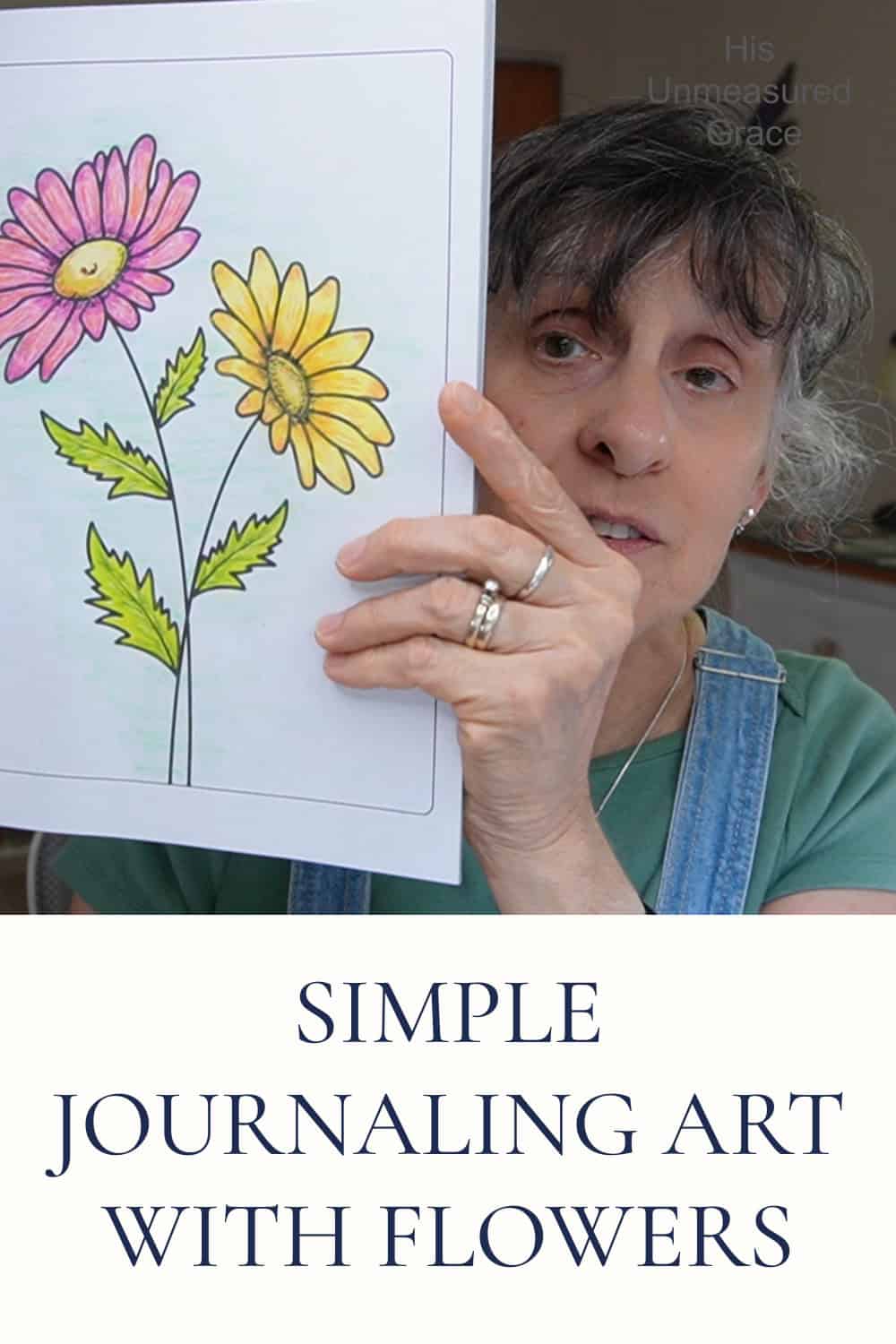
One of the easiest ways to begin flower journaling art is with a flower coloring book.
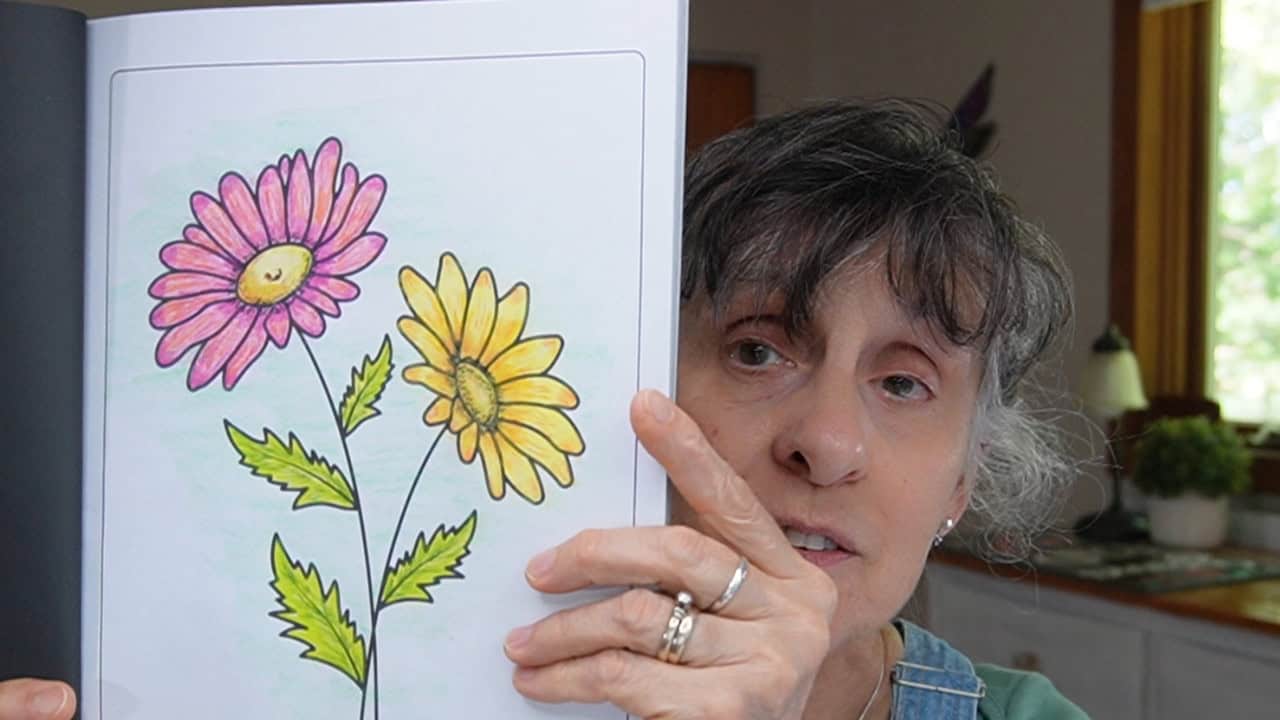
I have a large-print flower coloring book from Amazon filled with simple designs. The flowers aren’t overly detailed, which makes them especially helpful when you’re just getting started.
You can color the flowers directly in the book or use them as inspiration for your own drawings. Look carefully at the basic shape, the center of the flower, the petals, the stem, and the leaves.
You may be surprised by how easily you can recreate a simplified version in your journal.
You don’t have to copy every line or detail. Your flower doesn’t need to look exactly like the example. Allow it to be your own.
If drawing still feels intimidating, begin by coloring the flowers in the book. As you grow more comfortable, try copying one onto a separate sheet of paper or into an inexpensive journal.
Confidence often grows through practice, one simple flower at a time.
Use Your Phone to Find Color Inspiration
Sometimes I can draw or color a flower but have no idea which colors to use.
Your phone can help with this.
I take a picture or screenshot of the flower and use Google Lens through the Google app. It can often identify the flower or show me pictures of similar flowers. Those images give me ideas for choosing colors.
Of course, you don’t have to color your flower realistically. God created flowers in an incredible variety of colors, and your journal is a place to be creative.
Make your flower pink, purple, blue, yellow, or any color you enjoy. Layer several colors together or keep everything soft and simple.
There are no art-journaling police checking to see whether you used the “correct” colors!
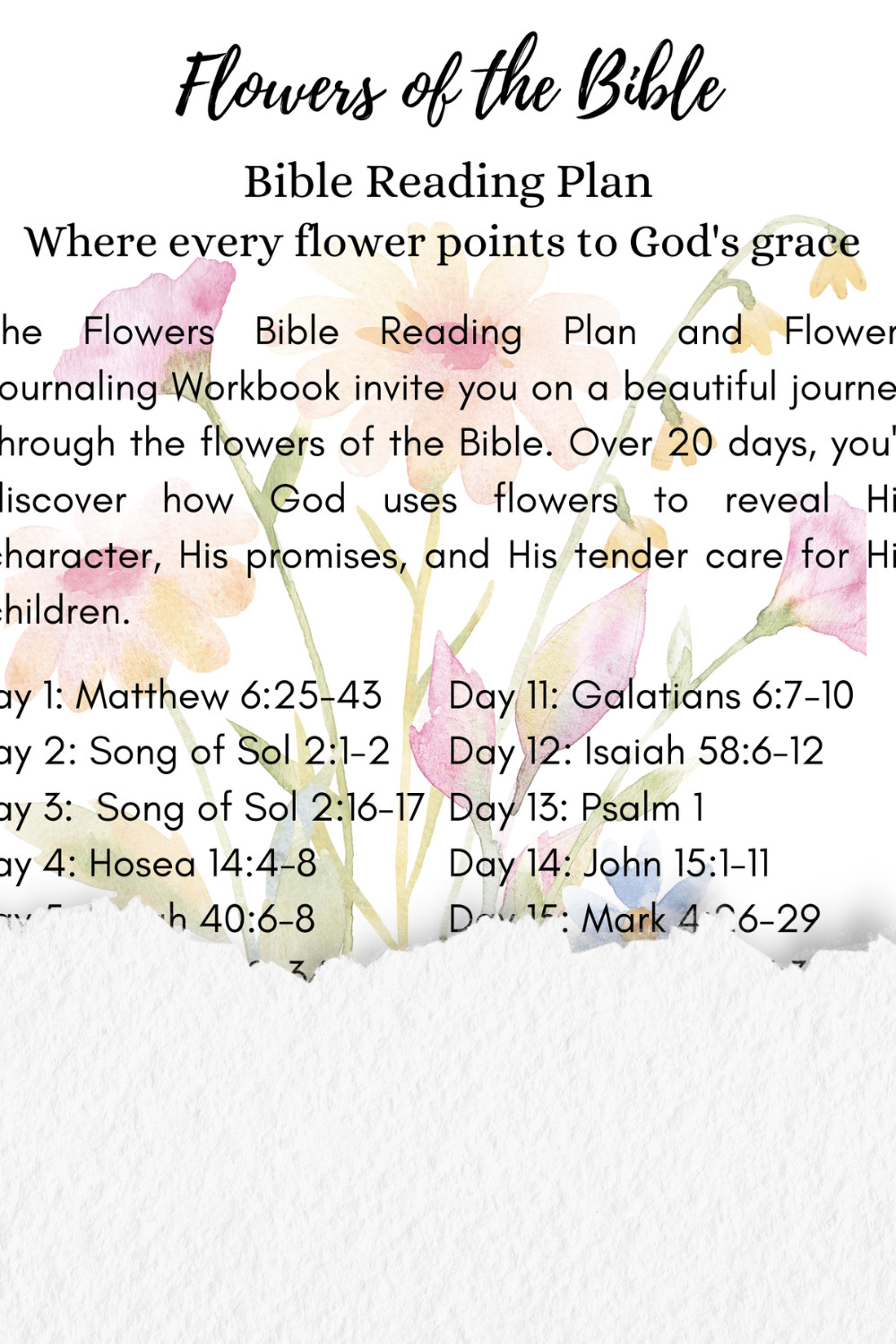
FREE Flowers Bible Reading Plan
Where every flower points to God’s Grace
- 20 Days of verses about flowers!
- Discover flowers in the Bible!
- Learn how flowers point to God’s grace, faithfulness, provision, and love!
- Illustrated devotionals on flowers!
- Learn to draw and paint flowers!
Add a Meaningful Bible Verse
Once you’ve drawn or colored your flower, add a Bible verse.
You may want to write the entire verse, but you don’t have to. If the verse is long, choose the phrase that speaks most deeply to your heart.
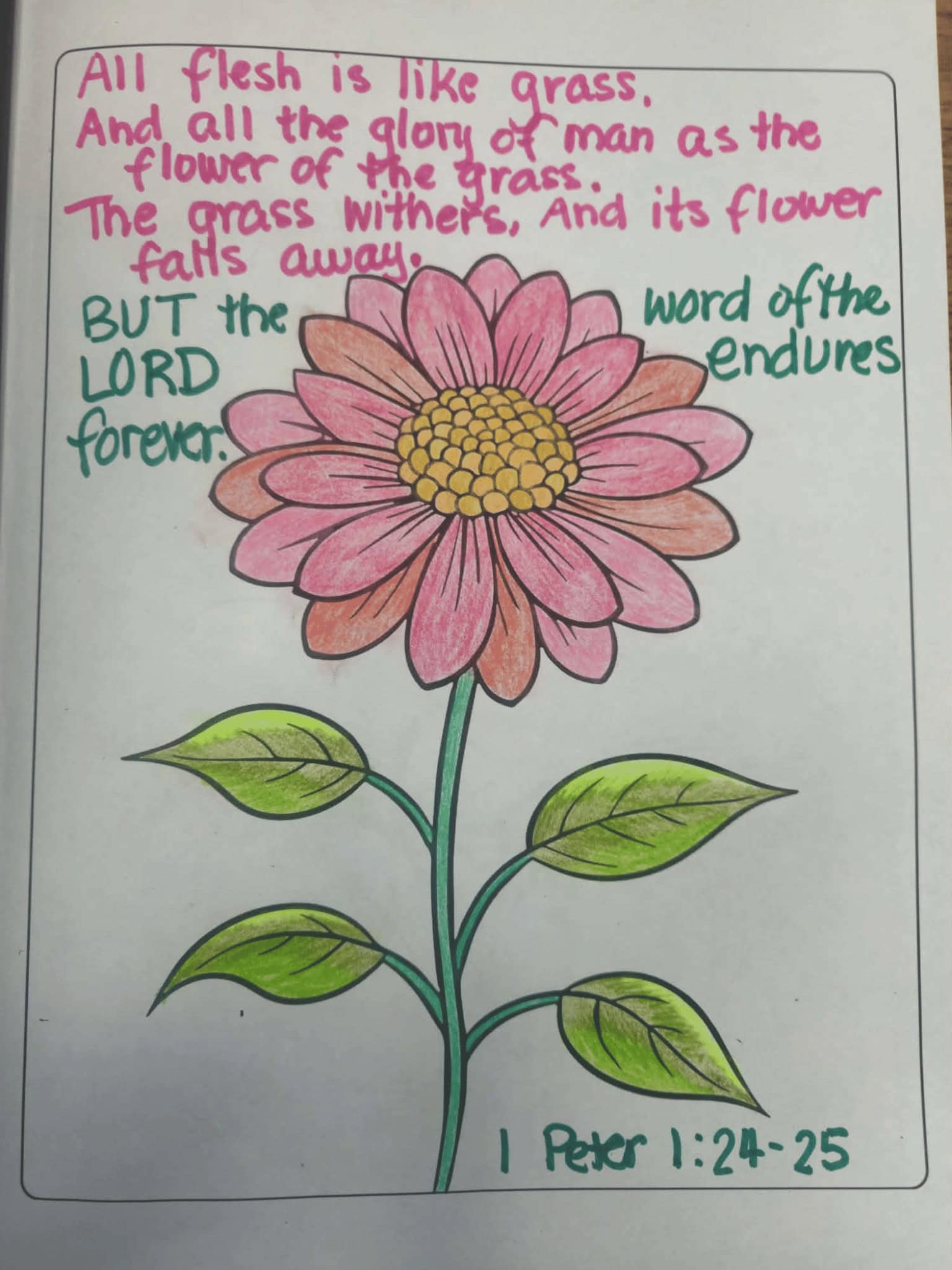
Writing only part of the verse can give your page more breathing room while helping you focus on one important truth.
For example, you might write a short phrase such as:
- “Consider the lilies.”
- “The word of our God stands forever.”
- “Do not grow weary.”
- “Abide in Me.”
- “From Me is your fruit.”
A short phrase can stay with you throughout the day. You can repeat it when you feel anxious, weary, distracted, or discouraged.
The goal isn’t to fill every empty space on the page. The goal is to allow God’s truth to fill your heart.
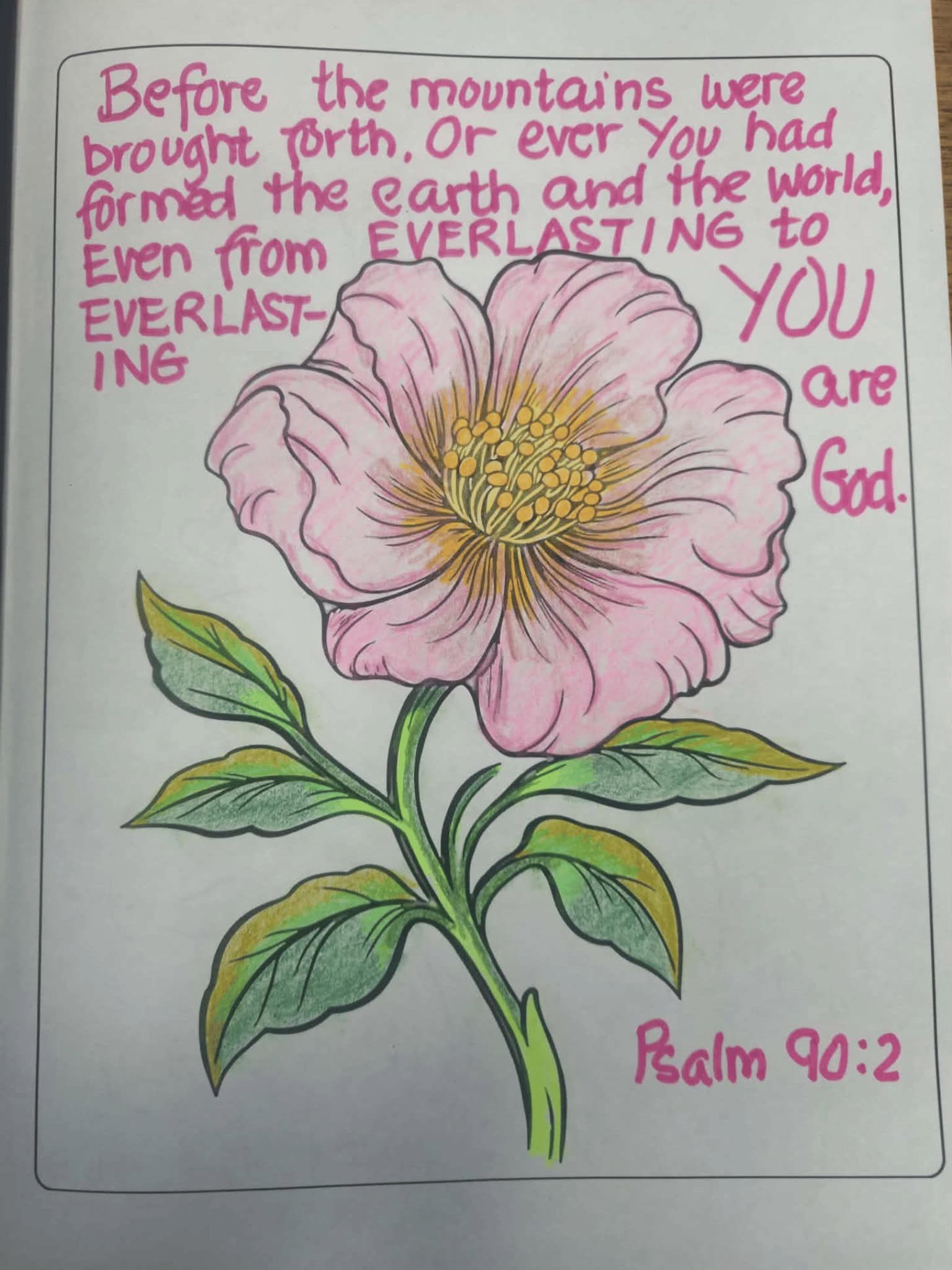
Why I Love Scripture Writing
My Flowers Journaling Workbook includes a 20-day Bible Reading Plan along with journaling and Scripture Writing pages.
I’ve started creating some of my Bible Reading Plans with 20 days instead of 30. Even though a reading may include only one verse or a short passage, I often spend more time studying it than you might expect.
Having fewer assigned days gives me the freedom to go deeper without feeling rushed or falling behind.
I especially love copying Bible verses by hand. Scripture writing slows me down, helps me relax, and allows me to notice words or phrases I might otherwise miss.
When you write a verse slowly, you begin to see how God uses a flower, seed, vine, or piece of fruit to teach you something about your relationship with Him.
You aren’t simply copying words onto paper.
You’re giving yourself time to listen, reflect, and allow the truth of Scripture to settle into your heart.
Try Simple Watercolor Flowers
Watercolor is another beautiful way to add flowers to your journaling.
I’ve been practicing a simple wet-on-dry watercolor technique. This means the watercolor paint is wet, but the paper is dry.
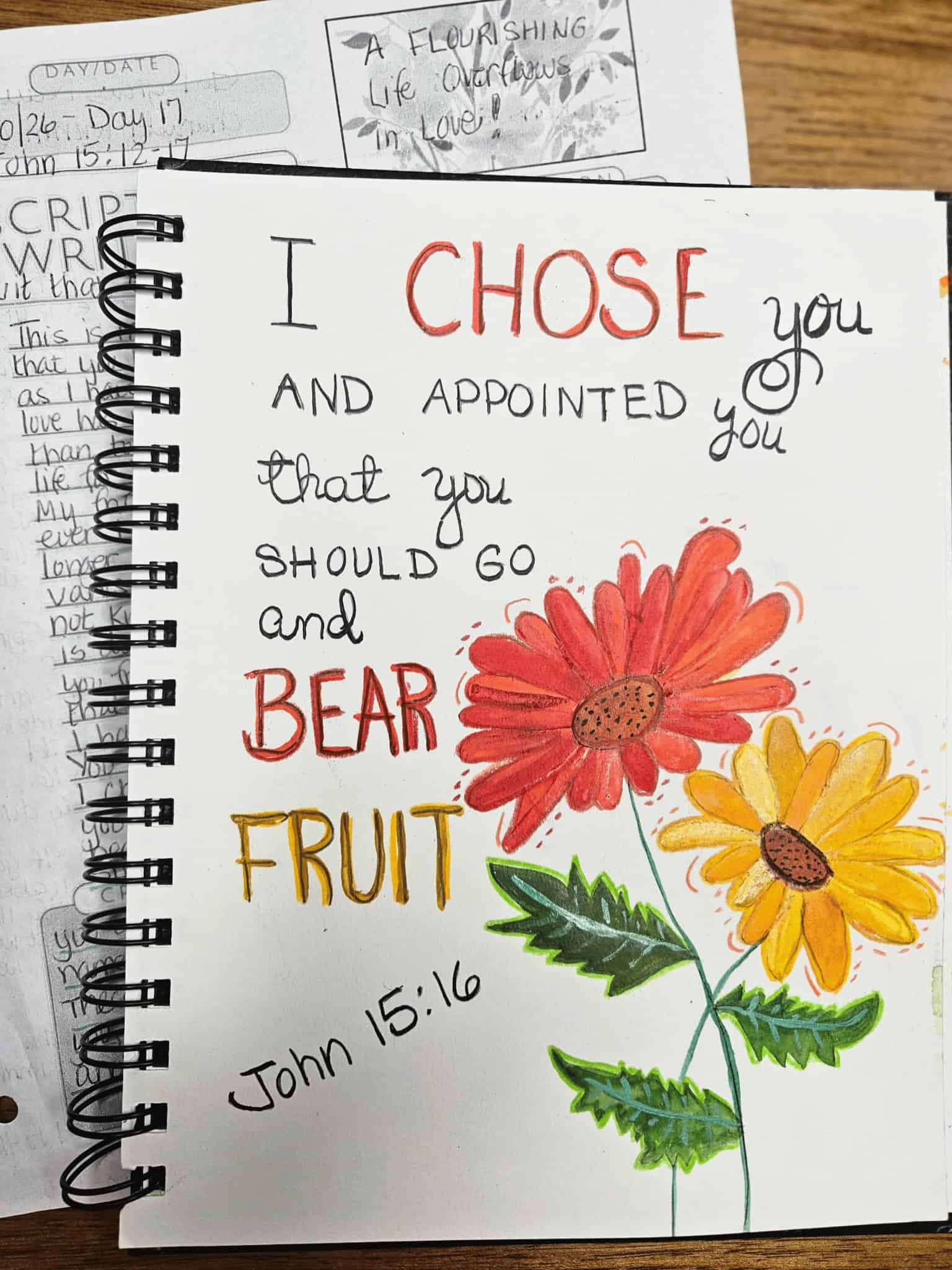
I prefer this method because it gives me a little more control over where the color goes. I can place the paint onto the dry paper with my brush and allow it to form a simple petal or leaf.
Wet-on-wet watercolor . . . adding wet paint to wet paper . . . can spread and move unpredictably. It creates beautiful effects, but I don’t always want the paint moving into the area where I plan to write my verse.
If you’re new to watercolor, begin with wet paint on dry paper. Try creating five or six petals around a small center. Add a stem and a couple of leaves.
Your flower doesn’t need to be botanically correct. A simple impression of a flower is enough.
I like using a small, hardcover watercolor booklet because the cover protects my drawings. I can also use Prismacolor pencils on some of the pages, giving me several art options in one journal.
Colored Pencils and Crayons Work Too
You don’t need watercolor supplies to enjoy flower journaling.
Colored pencils and crayons are wonderful choices, especially if they help you feel more confident.
Crayons are familiar, easy to control, and simple to sharpen. You can layer colors to create depth or use an eraser to soften some areas. Colored pencils also allow you to add gentle shading without worrying about paint spreading across the page.
Use whatever supplies you already have:
- Crayons
- Colored pencils
- Watercolor pencils
- Markers
- Gel pens
- A simple black pen
- Inexpensive watercolor paints
Don’t wait until you have the perfect journal or a complete set of art supplies. Begin with what you have.
A pencil, a box of crayons, and a sheet of paper are enough.
A Simple Flower Journaling Process
Here is an easy way to create your first flower journaling page:
- Choose a short Bible verse or meaningful phrase.
- Read the surrounding passage so you understand its context.
- Write the verse slowly in your journal.
- Choose a simple flower from a coloring book or photograph.
- Draw or trace the basic flower shape.
- Add color with pencils, crayons, or watercolor.
- Write one sentence about what God is teaching you.
- Close your time with a short prayer.
Don’t rush the process. This isn’t another task to finish or another item to check off your list.
Allow it to become a restful time with Jesus.
Let Go of Perfection
Your petals may not be evenly spaced. Your handwriting may tilt across the page. The color may wander outside the lines.
That’s okay.
The most meaningful pages are not always the most polished ones.
They’re often the pages where you can see your own hand, remember what you were walking through, and recall how God met you through His Word.
You aren’t creating something to impress anyone.
You’re creating a visual reminder of your time with Jesus.
The flower is simply a tool that helps you slow down. God’s Word remains the focus.
FREE Flowers Bible Reading Plan
Where every flower points to God’s Grace
- 20 Days of verses about flowers!
- Discover flowers in the Bible!
- Learn how flowers point to God’s grace, faithfulness, provision, and love!
- Illustrated devotionals on flowers!
- Learn to draw and paint flowers!
Try Flower Journaling Art This Week
I want to challenge you to try one simple flower this week.
Choose a verse, draw or color a flower beside it, and spend a few quiet minutes thinking about what the passage teaches you about God.
If you don’t feel artistic, begin with a coloring book.
If watercolor makes you nervous, use crayons. If you don’t want to draw an entire flower, add only a few petals, a leaf, or a small border.
Start small and keep it simple.
The more often you practice, the more comfortable you’ll become. But even if your art never looks professional, your time spent meditating on Scripture will never be wasted.
Slow down and allow God’s Word to fill your heart. Let each flower remind you of His creativity, care, and faithfulness.
I hope you’ll join me in Jesus Journaling on Facebook and follow along on Substack, where I share more flower devotionals, Scripture writing encouragement, and simple journaling ideas.
And remember: your page doesn’t need to be perfect to become a beautiful part of your walk with Jesus.